
Running a Sex Offender Check in Clarke County
The official starting point is the ALEA Community Information Center. The Alabama Law Enforcement Agency's Criminal Justice Information Services division maintains the statewide registry, while local law enforcement registers people, collects a current photograph and fingerprints, verifies reported facts, and sends the data to ALEA. No separate official Clarke County registry portal is published. A city, county, ZIP code, address-radius, or name search in the state system is therefore the public route for Clarke County registry records.
Start with the narrowest facts known. A full name or alias may separate people with similar names. A place search is more useful for community awareness near a home, school, route, or family address. Then open the full profile instead of relying on a pin or short result card. The profile gives the reported addresses, identifying traits, registrable convictions, vehicles, and compliance status needed to interpret the result. It does not replace the sheriff when a record may be stale or wrong. It also does not replace the Clarke County Circuit Clerk for the underlying court case or the Clarke County Jail for current custody. The county government directory remains a useful check on Grove Hill agency routes.
The official Community Information Center menu shows how Alabama groups registry and other community services.
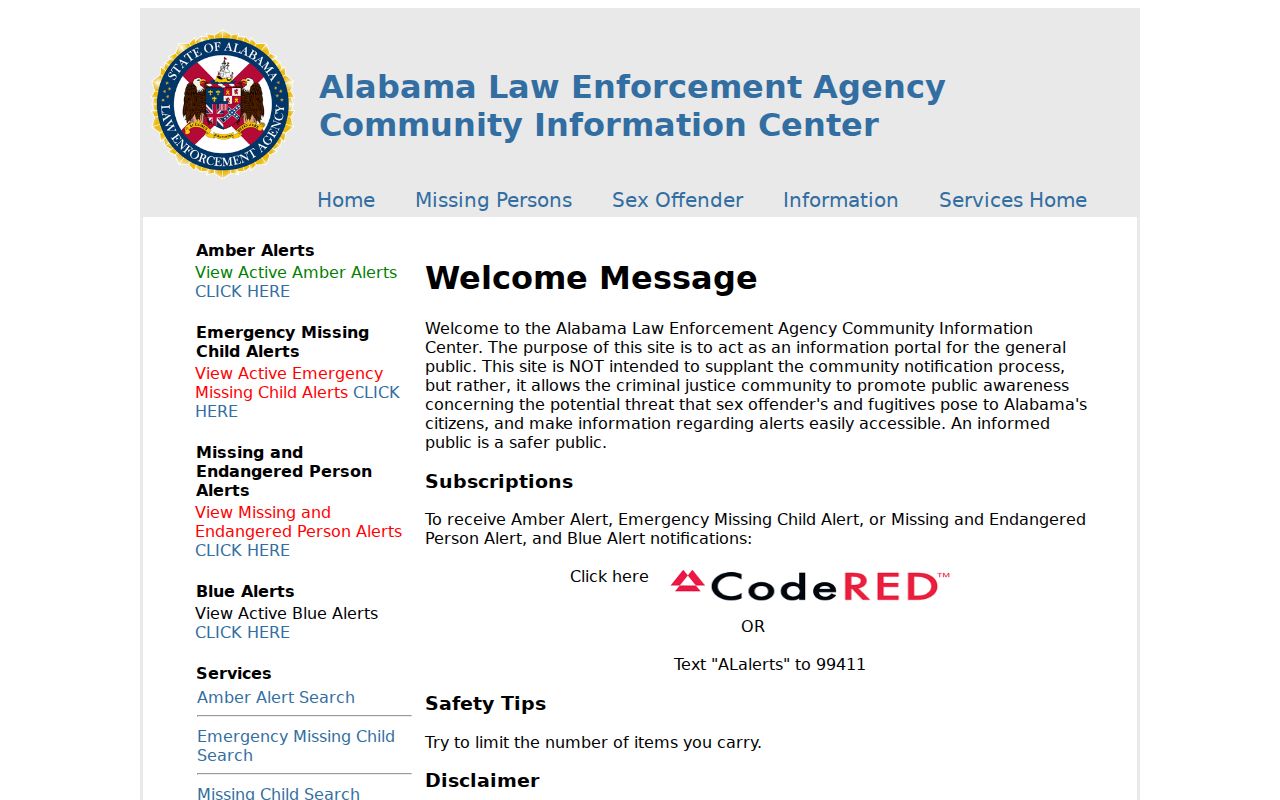
This service menu is the statewide doorway, so a Clarke County search should remain on the official ALEA path rather than a commercial people-search site.
Clarke County Offender Registration
Clarke County registration starts with local law enforcement. The countywide contact is the Clarke County Sheriff's Department at 114 Court Street in Grove Hill, telephone 251-275-4254. Call first to confirm the responsible officer, current counter hours, and whether a person who lives within a municipality must also report to the city police department. The official county page does not publish a dedicated registration-unit name, an appointment calendar, or a separate registry list.
Local staff collect and verify far more data than the public profile displays. The registration record can include fingerprints, identity numbers, telephone information, temporary addresses, school and work facts, vehicles, scars and tattoos, and checks tied to residence rules. ALEA then publishes only the information authorized by Alabama law. That split matters: the sheriff handles local reporting and suspected noncompliance, while ALEA operates the public Clarke County sex offender registry search.
The ALEA sex offender forms page collects official responsibility, travel, and reporting materials.
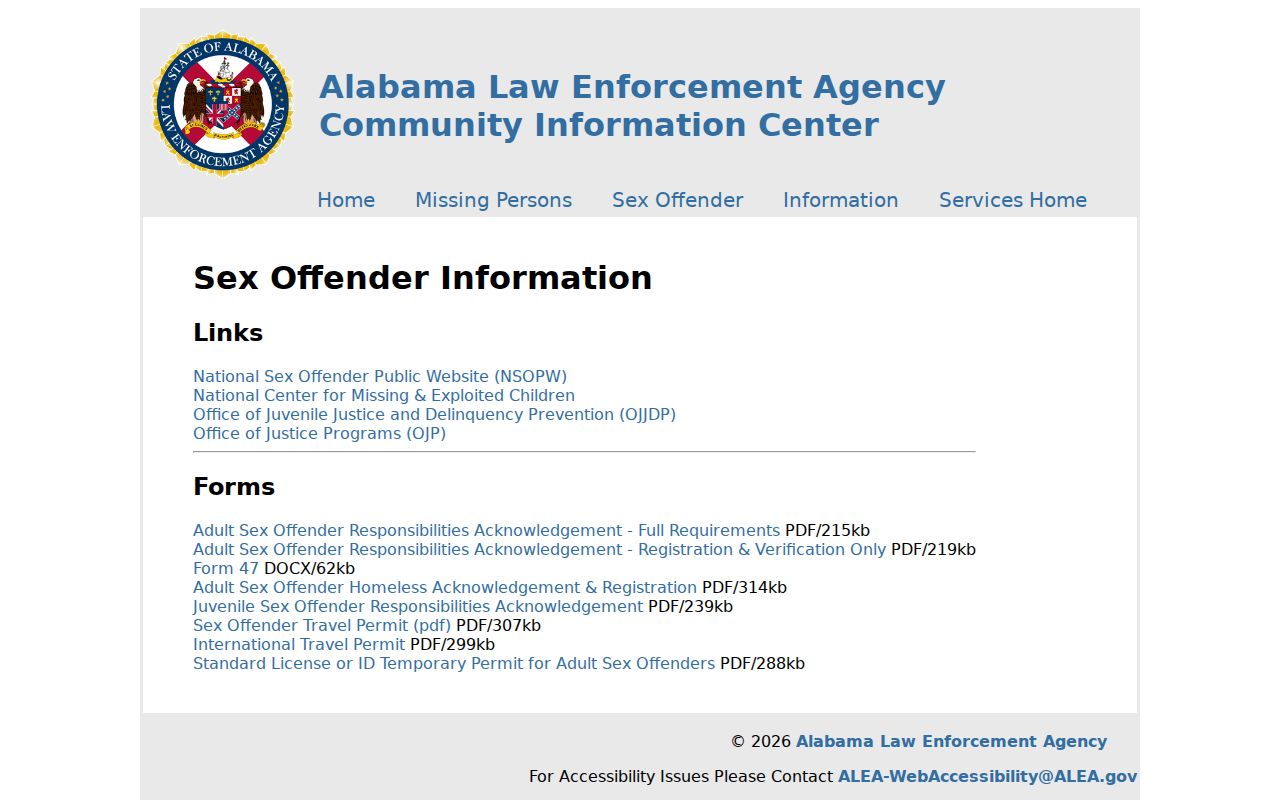
These forms show why public search results are only one view of a broader registration process shared by Clarke County officers and ALEA.
Searching the Alabama Sex Offender Registry
The Alabama Sex Offender Registry search supports name and alias searching plus several location routes. Alabama Code Section 15-20A-8 requires public search by name, city or town, county, ZIP code, and geographic radius. The live vendor-hosted search blocks automated access, so the precise radius choices should be read on the current form. The system is free public access, not a subscription case index.
- Open the official ALEA registry and read its public-use warning before searching.
- Use a name or alias when identity is known. For a local scan, choose Clarke County, a city or town, a ZIP code, or an address and radius.
- Review the list or map, then compare the photograph, aliases, physical description, and reported addresses before deciding that a result is the right person.
- Open the complete profile. Read the offense, conviction date, vehicles, compliance label, and address details together, then report a suspected error through an official channel.
| Field Label | Type | Required | Notes |
|---|---|---|---|
| Name or alias | Text | For name route | Use known spelling and review aliases |
| City or town | Text or select | No | Searches a named Alabama municipality |
| County | Dropdown | No | Select Clarke for countywide results |
| ZIP code | Text | No | Useful when a mailing area crosses local lines |
| Address and radius | Map search | For radius route | Confirm the live distance choices in the portal |
| Compliance or alerts | Filter or enrollment | No | Review status filters and current alert settings |
The state registry search form is the direct interface for these controls.
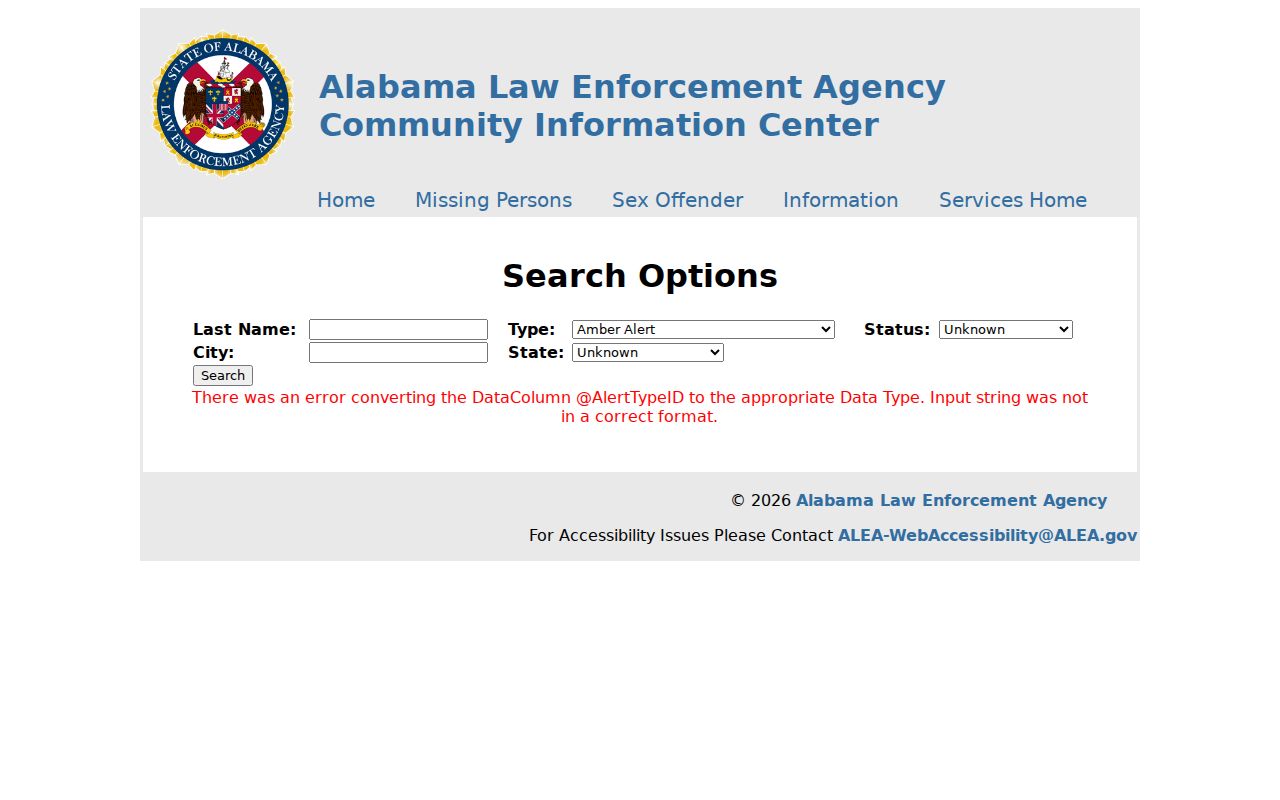
The form's mix of identity and place fields lets a reader move from a broad Clarke County map to a more exact profile review.
Why Clarke Registry Searches Miss
A blank Clarke County registry result does not prove that no relevant registration record exists. Alabama does not publicly post every person whose information may be held by law enforcement. ALEA identifies exceptions that can involve juvenile adjudications, Youthful Offender Act matters, certain first convictions for Indecent Exposure or Sexual Misconduct, and some out-of-state status questions. Sealed or protected information also remains outside ordinary public display.
Place searches can miss for a second reason. Registry maps use reported locations, and a person may have changed a residence, school, or work address before the update reaches the public view. Search aliases and nearby ZIP codes when the facts support it. For someone who moved across a state line, use the national layer as well. Never treat a missing pin as a clearance certificate or a promise of safety.
Note: Public visibility follows Alabama law and registration status, so it is not a simple list of every past sex-related court matter.
What a Registry Profile Shows
Alabama Code Section 15-20A-8 defines the core facts the public may see. Read all fields as a set. A mapped address helps with place-based awareness, while a photograph, aliases, marks, and vehicle facts help distinguish people. The listed offense and conviction date explain why the registration entry exists. A compliance label addresses whether current duties are being met; it does not grade a person's present risk.
| Name and aliases | Published legal name and other reported names used to match identity |
|---|---|
| Photo and description | Current submitted photograph plus physical traits, scars, marks, and tattoos where published |
| Reported locations | Residence, school, and employer addresses authorized for public display |
| Vehicles | Vehicle descriptions and tag information associated with the registration record |
| Offense facts | Registrable offense, statute information, and conviction date |
| Compliance status | Labels such as compliant, non-compliant, absconded, or unknown |
Private agency fields are broader. Social Security numbers, telephone numbers, full criminal-justice identifiers, warrant checks, and agency cautions collected through Form 47 are not all public. That boundary protects sensitive data while leaving the facts Alabama law selects for community notice.
Reading Clarke Registry Status Labels
The official registration form uses four status choices: Compliant, Non-compliant, Absconded, and Unknown. Compliant means the agency record indicates the person is meeting current reporting duties. Non-compliant flags a known failure to meet a duty. Absconded signals that the person has left supervision or cannot be found as required. Unknown means the current status has not been resolved. None of these labels should be replaced with assumptions drawn from a map pin.
- Quarterly report
- Covered adults generally report in person during their birth month and every three months after that.
- Change report
- Residence, work, school, temporary address, and other required changes must be given through the registration process.
- Reported address
- The location supplied and verified through official channels, which may need review if a move has not yet been resolved.
- Compliance
- A statement about current statutory duties, not an individualized assessment of future conduct.
The ALEA registry FAQ says registry data updates daily in real time and explains reporting limits.
The update notice is useful context, but a specific questionable address still belongs with the sheriff or ALEA for verification.
Registration Requirements and Levels in Alabama
Alabama does not label its public registry with federal Tier I, II, and III levels. Its Sex Offender Registration and Community Notification Act instead uses statutory categories tied to age, offense, adjudication, and status. Covered adults generally face lifetime registration and quarterly in-person verification. Juvenile rules vary, and public notice is not the same for every category. Calling these categories tiers would misstate Alabama law.
| Alabama category | Duration or publication | Reporting pattern |
|---|---|---|
| Covered adult | Generally lifetime; publication follows statute and status | Birth month and every three months thereafter |
| Juvenile age 14 or older with an enumerated serious offense | Lifetime; may petition the sentencing juvenile court after 25 years from release | As required by the Act and court status |
| Other juvenile subject to the Act | 10 years from first registration | As required by the juvenile provisions |
| High-risk juvenile | Public notification may apply under court and risk provisions | Set by the controlling provisions |
| Youthful or out-of-state offender | Publication depends on legal status and, in some cases, due process | Depends on the applicable status |
| Specified first offense exception | ALEA says a first Indecent Exposure or Sexual Misconduct conviction is not posted under the stated exception | Not shown as an ordinary published entry |
The category table must be read with the juvenile-duration statute and the covered-offense statute. A public profile may not reveal every legal fact needed to decide which provision controls.
When a Clarke Registry Address Looks Wrong
Do not confront anyone at the listed address. Write down the profile name, reported location, compliance label, and the exact fact that appears wrong. Then call the Clarke County Sheriff's Department at 251-275-4254. The sheriff is the countywide registration contact and can route the concern to the responsible officer. If the matter needs state review, contact ALEA's Sex Offender Unit at 334-676-7898 or sexoffenderunit@alea.gov.
An old address can point to a data lag, an unreported move, a pending verification, or a search mismatch. Only the responsible agency can sort those possibilities. If there appears to be an immediate threat, use emergency services instead of an email. For a routine data concern, give the agency enough exact information to find the profile without spreading the registrant's details through social media.
Note: Reporting a suspected error supports accurate Clarke County registry records; it does not authorize surveillance, contact, or public accusation.
Clarke and National Registry Layers
The Alabama and national systems answer related but different questions. The state registry is the best source for Clarke County profile detail, Alabama categories, current local contacts, and state reporting rules. The U.S. Department of Justice National Sex Offender Public Website queries participating jurisdictions through one official interface. That broader layer helps when a person recently moved, an address is near a state boundary, or the known history points outside Alabama.
The NSOPW national search interface provides the cross-state layer without turning to a commercial aggregator.
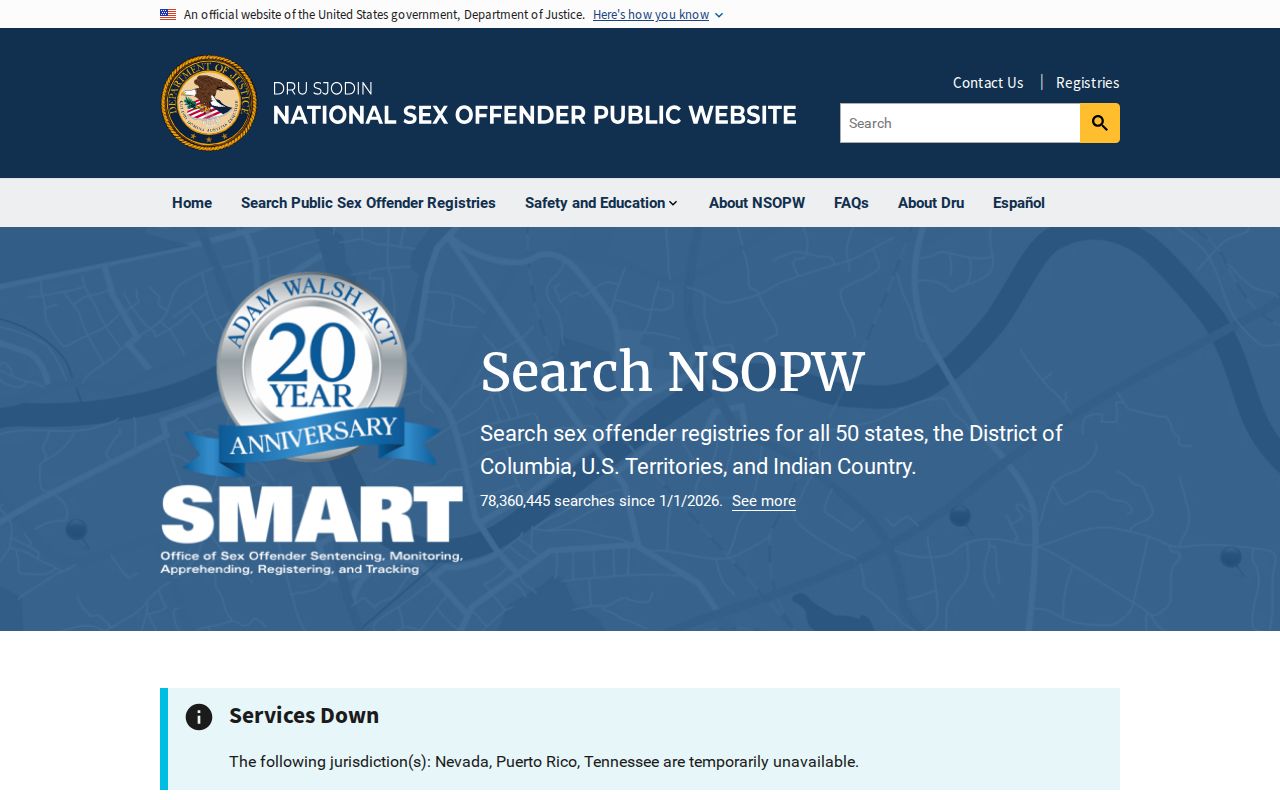
A national result should be opened at its originating jurisdiction, where current profile fields, warnings, and reporting contacts can be checked.
Lawful Use and Community Notification
Registry access supports personal, family, and community awareness. Alabama Code Section 15-20A-21 governs community notice. In cities with at least 5,000 residents, authorized notice reaches residences within 1,500 feet and schools and day-care facilities within three miles through mail, electronic delivery, publication, or another permitted method. Clarke County residents should rely on the official registry and agency notice, then make calm safety plans based on verified facts.
Inclusion follows conviction history and Alabama statute. ALEA does not make a fresh, individualized finding of current danger before publishing each profile. A listed address may also house people who are not registrants. Use the data for awareness, not punishment, intimidation, exclusion beyond what law permits, or contact with anyone at the address.
Misuse can bring penalties: Alabama Code Section 15-20A-8 forbids using registry information to unlawfully injure, harass, or commit a crime against a listed person or anyone at a reported address. Civil or criminal penalties may result.